
Why Restaurant Layout Planning Matters
A restaurant’s layout is more than just where tables and chairs go—it influences customer experience, service efficiency, ambiance, and even profitability. A well-planned restaurant layout ensures that customers enjoy their meals comfortably while staff can move smoothly across the space. In a competitive city like Delhi, where diners expect exceptional ambiance along with great food, working with experienced interior designers in Delhi becomes essential for creating a functional and attractive restaurant setup.
Understanding Your Restaurant Concept
Before planning the layout, it’s crucial to understand the concept of your restaurant. Your theme—whether it’s fine dining, a casual café, a fusion restaurant, or a luxury dining space—directly shapes the design. Interior designers study your target audience, cuisine type, and overall dining experience you want to offer. For instance, fine-dining spaces require spacious seating for privacy, while cafés benefit from flexible arrangements and open layouts. Proper concept clarity helps create a layout that matches your brand identity.
Space Utilization and Flow
Efficient use of space is one of the biggest challenges in restaurant interior design, especially in cities like Delhi where commercial rent is high. Expert designers ensure every square foot is used smartly. They plan customer walkways, staff routes, waiting zones, and seating clusters to maintain smooth movement. Good circulation reduces crowding and enhances service speed, making your restaurant feel comfortable and well-organized.
Entrance and Reception Area Design
The entrance creates the first impression of your restaurant. A well-designed reception area sets the tone for the entire dining experience. Designers focus on attractive signboards, a welcoming reception unit, and seating for waiting guests—especially important during rush hours. The entrance must remain open, organized, and aligned with your restaurant’s theme.
Seating Arrangement and Customer Comfort
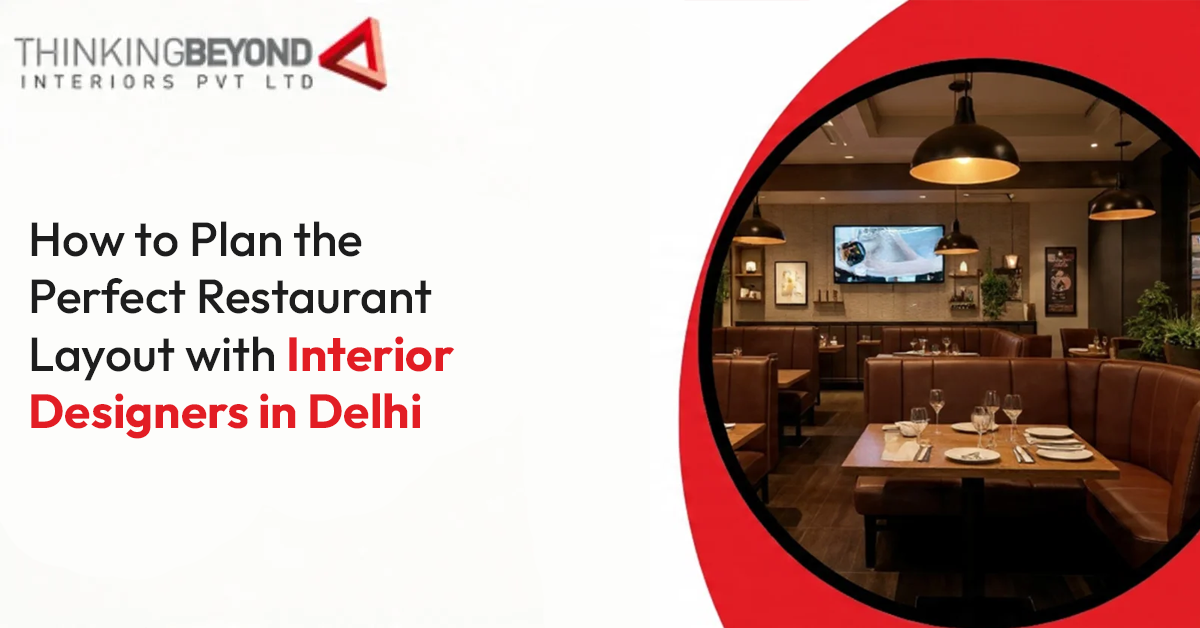
Comfortable seating is essential for customer satisfaction. The layout should balance comfortable spacing with optimal table capacity. Designers plan a mix of two-seaters, four-seaters, booth seating, and even community tables depending on the concept. Sufficient spacing ensures privacy and smooth staff movement. High-quality, ergonomic furniture encourages longer dining durations and improves customer experience.
Kitchen Placement for Fast and Efficient Service
The kitchen is the operational engine of your restaurant. Designers strategically position the kitchen to support quick food delivery and hygiene standards. Clear divisions for food storage, preparation, cooking, plating, and cleaning help optimize workflow. The route between kitchen and dining area must remain direct and obstruction-free. Proper ventilation and exhaust systems are incorporated to maintain freshness in the dining area.
Bar and Beverage Station Design
If your restaurant includes a bar or beverage section, its position impacts both aesthetics and workflow. Designers ensure the bar is visually appealing yet separated enough from dining areas to avoid disruption. Ambient lighting, stylish counters, display shelves, and comfortable bar seating create a vibrant focal point. The backend layout is optimized for quick mixing, storage, and service efficiency.
Lighting That Enhances Ambiance
Lighting plays a major role in shaping the dining mood. Interior designers use a blend of ambient, task, and accent lighting to complement the restaurant theme. Warm lighting suits intimate dining, while bright tones work well in family restaurants. Pendant lights, wall sconces, LED strips, and decorative lamps help highlight zones and enhance food presentation. Balanced lighting prevents harsh shadows and ensures guest comfort.
Acoustics and Noise Control
Poor acoustics can ruin even the best dining experience. Designers incorporate materials such as acoustic panels, upholstered furniture, textured walls, and ceiling baffles to control noise levels. Good acoustic design ensures conversations remain comfortable and background music feels pleasant. This is especially important for busy restaurants, cafés, and fine-dining spaces.
Storage and Utility Areas
Smart storage design keeps the restaurant organized and clutter-free. Designers create functional spaces for cutlery, linens, cleaning supplies, and food inventory. Utility zones are placed strategically to support daily operations. Hidden storage—like built-in cabinets and shelves—keeps essentials accessible while maintaining a clean look in the dining area.
Washroom Placement and Design
A well-designed washroom improves customer satisfaction. Washrooms must be easy to access yet discreetly placed away from dining areas. Designers use durable materials, hygienic surfaces, and good ventilation to keep washrooms clean and pleasant. A restaurant with appealing washrooms leaves a positive impression and encourages repeat visits.
Outdoor Seating and Landscaping
If your restaurant offers outdoor seating, it can significantly elevate the dining experience. Designers create cozy and stylish open-air areas using greenery, warm lighting, and weather-resistant furniture. Outdoor dining often becomes a preferred choice for customers seeking a relaxed, scenic atmosphere.
Choosing the Right Materials and Finishes
Restaurants require durable, easy-to-maintain materials. Designers select flooring, wall finishes, furniture, and décor that withstand heavy usage while maintaining visual appeal. High-quality finishes also reduce long-term maintenance and enhance the overall restaurant aesthetic.
Bringing Your Brand Identity into the Layout
A strong brand identity is essential for restaurant success. Designers integrate brand colors, artwork, themed décor, and custom furniture to express your restaurant’s personality. Whether modern, rustic, luxurious, or minimal, the layout must visually communicate your brand story and create a memorable customer experience.
Conclusion
Designing the perfect restaurant layout requires thoughtful planning, creative solutions, and professional expertise. From seating and kitchen placement to lighting, acoustics, and branding, every element shapes customer experience and operational efficiency. If you're opening or redesigning a restaurant in Delhi, ThinkingBeyond Interiors can help you create a layout that enhances ambiance, boosts service flow, and strengthens your brand identity.